
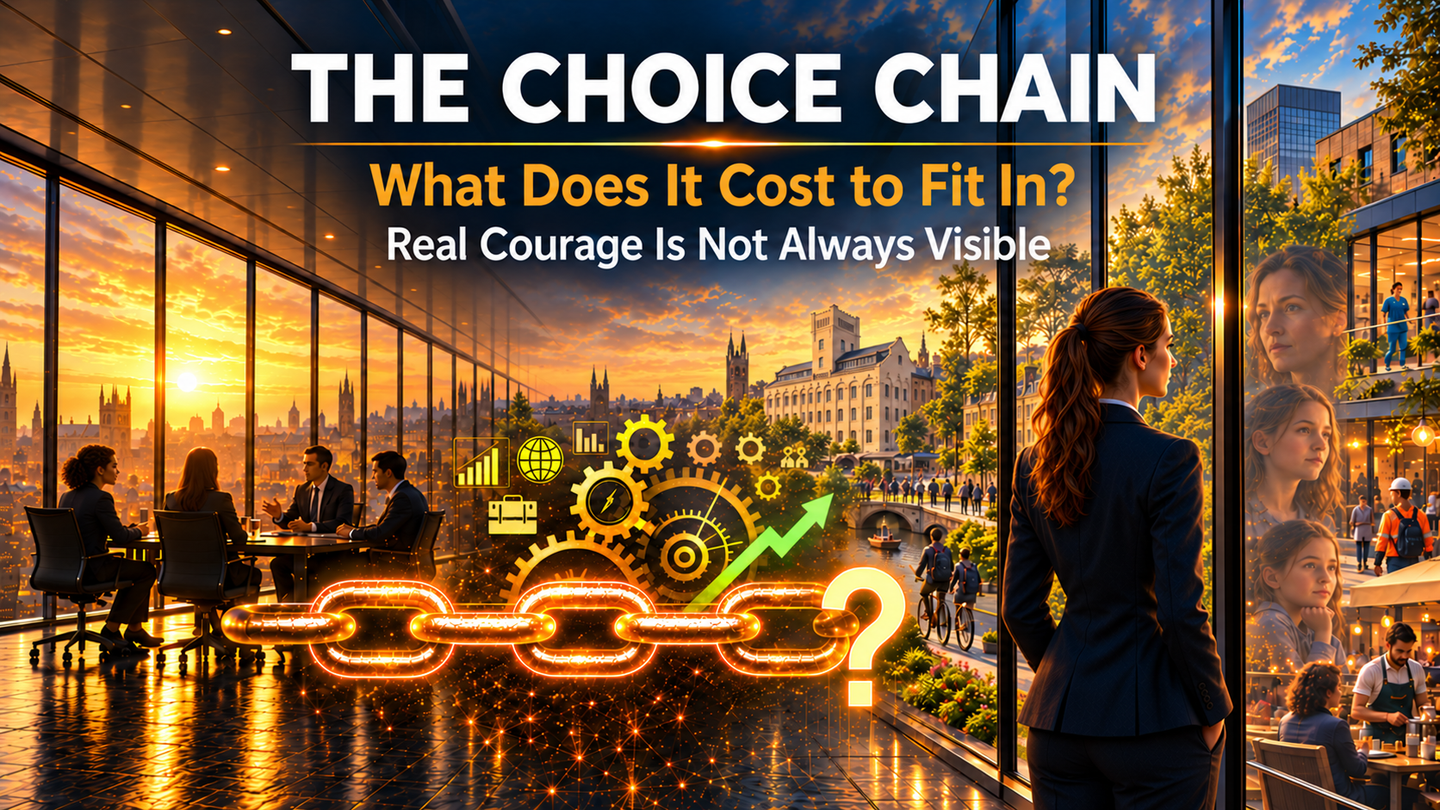
What Does Is Cost to Fit In?
From childhood to the boardroom, our experiences shape how we speak, lead and belong. But when fitting in means hiding who we are, what does it cost our mental health and what do organisations lose? Exploring courage, authenticity and the choices that create workplaces where people can truly flourish.
Real courage is not always visible.
On World Mental Health Day 2026, with its focus on lived experience being heard and creating real change, I've been reflecting on the courage it can take simply to be ourselves.
People bring personal experiences into their working lives others may know nothing about. What appears to be confidence, hesitation, challenge or resistance may have a much more complex explanation.
Our past experiences influence how we respond to uncertainty, authority, criticism and each other. Some people have learned to speak articulately. Others may have learned to be cautious, avoid mistakes or carefully judge how their words will be received.
Yet those same people may also bring exceptional insight, empathy, judgement and determination.
Over the years, I've come to understand how much courage it can take to find your voice, especially when life has taught you that speaking up may come at a cost.
We begin learning about trust, authority and the consequences of speaking up long before entering the workplace. Those early experiences can shape our responses for years afterwards. The choices made by one generation influence the conditions experienced by the next.
When young people start work, they bring their experiences, expectations and developing sense of themselves with them.
What will our workplaces teach them next?
The difference between fitting in and belonging
Think back to when you first entered the workplace. How quickly did you begin learning its unwritten rules? Who could challenge decisions? What did confidence look like? Which behaviours were rewarded?
What parts of yourself did you feel you needed to change, hide or hold back to fit in? How did that feel? And as your career progressed, did you ever really stop?
We encourage people to bring their authentic selves to work. Yet organisations can have established expectations about who looks and sounds like a leader.
Research published in Sex Roles found that participants preferred masculine-presenting over feminine-presenting gay men for a high-status role. It illustrates how assumptions about gender expression can influence perceptions of leadership potential. Similar questions arise for women, quieter colleagues and others who don't fit an established image of success.
We may celebrate individuality while unconsciously rewarding conformity. What does continually adapting to meet expectations cost people? And what talent might organisations overlook?
Of course, no role will fulfil every aspect of our personal purpose. We all need to adapt, compromise and work effectively with others. But there is a difference between adapting our behaviour and feeling compelled to suppress who we are to succeed.
And what happens to our wellbeing when the person we feel we must become at work moves further away from the person we believe ourselves to be?
Are we preparing workplaces for the next generation?
Now imagine entering your first workplace today, carrying everything you've learned about yourself and the world so far. You're eager to contribute, find your place and build your future. But what if the expectations you encounter are very different from those you've learned to navigate?
The evidence on young people's mental health demands our attention. NHS England estimated that 23.3% of 17–19-year-olds had a probable mental disorder in 2023.
The government's 2026 Young People and Work review describes how mental health difficulties, limited workplace experience and demanding entry routes can combine to make the transition into employment harder.
Mental Health UK's 2026 research found that enthusiastic and motivated young whose confidence may be affected by unclear expectations, fast-paced environments and unfamiliar workplace norms. These are conditions that can also affect wider health, safety and wellbeing.
Employers may genuinely want to help but lack the resources, capability or support to respond effectively. They cannot be expected to become mental health services, just as young people cannot be expected to navigate every difficulty alone.
This isn't about a generation incapable of coping. Young people bring strengths, insight and potential. Education, healthcare, employers and communities all have roles in helping them flourish. Supporting that transition requires understanding on both sides, clear expectations and a willingness to learn what works.
While we prepare young people for work, how ready are our workplaces for the different experiences, capabilities and needs they bring?
The courage to speak and the responsibility to understand
The theme for World Mental Health Day 2026 is Lived Experiences Heard: Real Voices, Real Change. The World Health Organization emphasises that people with lived experience should help shape the decisions affecting their lives, not simply be invited to share their stories.
When someone shares something difficult with you, what happens within you—and what happens next because of your response?
In a recent LinkedIn discussion, Anthony Karpanos described a supervisor who stopped unsafe work and received immediate support from the organisation. One decision demonstrated what was genuinely valued. Imagine the message others would have received if that supervisor had been criticised instead.
The response to courage matters. It can strengthen trust and encourage others to speak or teach them that remaining silent is safer.
But leaders cannot read minds. A sensitively intended message may be misunderstood, while a brief response can feel like rejection when none was intended. Our experiences, pressures and assumptions influence both sides of a conversation.
Understanding requires mutual curiosity: explaining, questioning, listening and checking what we think we've heard.
Nor does psychological safety mean accepting every interpretation or agreeing with every request. Leaders must weigh evidence, navigate competing responsibilities and sometimes say no. They have a particular responsibility to explain their choices fairly and remain willing to reconsider them.
Every response sends a signal about what an organisation truly values.
Beyond coping towards flourishing
What if we examined the conditions in which people thrive with the same curiosity and rigour we apply when things go wrong?
Environmental Health offers a wider perspective on protecting and improving health. It considers the interconnected conditions in which people live, learn and work—from housing, food and environmental quality to employment, communities and opportunity.
Workplace health, safety and wellbeing are part of this wider system.
HSE's public guidance rightly emphasises assessing and managing work-related stress. Support programmes, conversations and resilience all have their place. But we must also examine how work is designed, how demands are balanced, the autonomy people experience and the decisions that shape organisational capacity.
Where do people feel trusted, valued and able to contribute as themselves? What choices created those conditions? And what can we learn from organisations where people are genuinely flourishing?
The Choice Chain helps make those choices and their consequences visible. Decisions create conditions that influence wellbeing, trust and contribution. These experiences, in turn, shape the signals people share and the choices that become possible.
The conditions we create today influence the choices people feel able to make tomorrow.
The next choice
We need the courage to speak, the responsibility to listen, the willingness to change and the accountability to make balanced decisions. All of us can contribute to better understanding; those with greater authority have greater power to shape the conditions.
What if we stopped asking people to become someone else to succeed at work—and made more deliberate choices about the conditions that allow them to contribute as themselves?
That could be better for the individual and for the organisation. More authentic contribution can bring different perspectives, earlier signals and better judgement into view. Better conditions create more opportunity to flourish—and to make better choices together.
Where Purpose Meets Practice one conversation, or decision, at a time.
References and Further Reading
World Health Organization (2026), World Mental Health Day 2026
NHS England (2023), Mental Health of Children and Young People in England
UK Government (2026), Young People and Work interim report
Mental Health UK (2026), Supporting Young People
Gerrard et al. (2023), Feminine-presenting gay men and high-status roles, Sex Roles
Health and Safety Executive, Stress and Mental Health at Work
If this resonates with you, particularly if you are operating at Board or Executive level, I’d welcome the conversation. How are decisions really being made in your organisation?
Start the conversation